
How to care for vegetable tanned leather — a complete guide
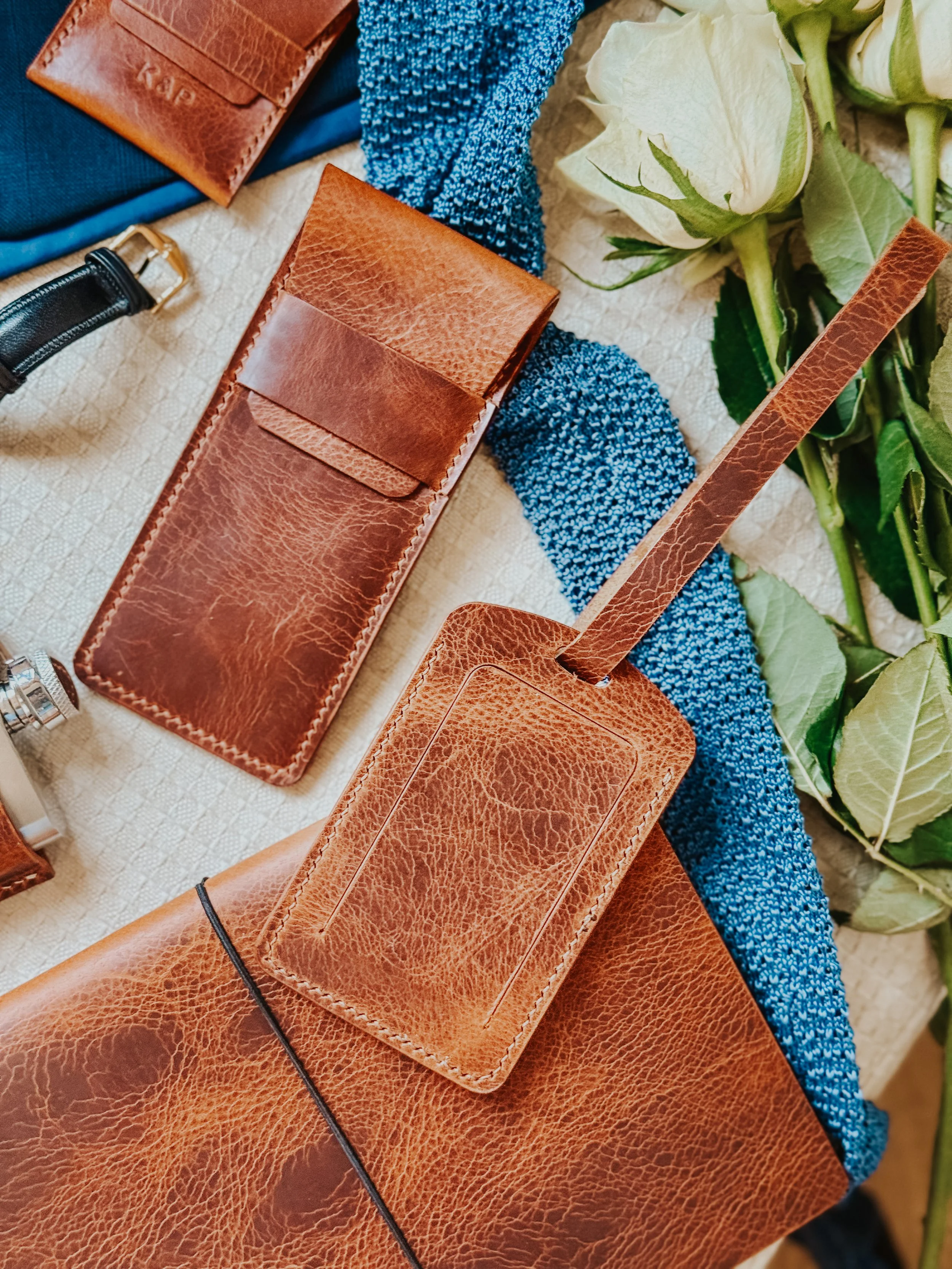
Most leather is finished to look the same on the day you buy and stay the same until the end of its use. Vegetable tanned leather isn't like that. It's alive, in the sense that it responds to everything you do with it — the oils from your hands, the light it sits in, the marks it collects as you use it and the places you take it. Treat it right and it doesn't just last. It gets better. Genuinely, visibly better, year on year.
What is vegetable tanned leather, and why does it patina?
Vegetable tanned leather is made using natural tannins such as tree bark and plant extracts, rather than the chromium salts commonly used in most leathers. It's a much slower process, often taking weeks rather than days, and it produces something fundamentally different to chrome-tanned leather: a material that changes colour and texture the more it's used. That change is called a patina — a gradual darkening and softening caused by oils, light and handling. It's not a flaw to be avoided. It's the entire point. Every Priestleys notebook, passport holder or wallet is made from full-grain vegetable tanned leather specifically because it ages this way — the version you receive is the beginning of the piece, not the finished version.
Day to day care
Vegetable tanned leather and water don't get on too well, so keep it away from rain, spills and prolonged damp where you can. If it does get wet, pat it dry immediately with a soft cloth — never use a hairdryer or any direct heat, which can cause the leather to crack or stiffen unevenly. Try to avoid leaving a piece in direct sunlight for long periods, as this can fade or unevenly darken the surface. You'll also notice the leather darkening naturally just from regular handling — this is correct, desirable, and exactly what's supposed to happen. A notebook cover carried daily will look noticeably different after six months than it did on day one, and that's the leather doing its job.
Conditioning
Most vegetable tanned leather only needs conditioning once or twice a year, depending on how much use it gets. A good beeswax-based balm or leather conditioner — are both widely available and work well we recommend Collonil—products to help keep the leather supple and helps protect it from drying out. Apply a small amount with a soft cloth in circular motions, let it absorb for a few minutes, then buff gently with a clean cloth. Avoid baby wipes, Vaseline or saddle soap on fine vegetable tanned leather — they're formulated for different leather types and can leave residue or strip the natural oils that give vegetable tanned leather its character.
Storage
If you're not using a piece for a while, store it in a breathable dust bag or a clean pillowcase rather than plastic. Leather needs air — sealing it away in plastic for extended periods can trap moisture and lead to mould or an uneven finish. A drawer or shelf away from direct heat and sunlight is ideal.
What to do if it gets scratched
Light surface scratches on vegetable tanned leather often buff out simply by rubbing the area gently with a finger — the natural oils in your skin are genuinely beneficial to this kind of leather and can soften and blend a mark back into the surface. Deeper marks tend to become part of the leather's character over time rather than something to worry about. A personalised keyring that picks up a scuff from your car keys isn't damaged — it's developing a story.