Why We Source Our Leather Directly — And What We Look For at the Tannery
Most people who buy a leather wallet, a handcrafted notebook, or a bespoke commission never think about where the leather itself came from. That is understandable. But it is something we think about constantly — and it is why we visit our tannery in person rather than placing orders from a catalogue.
Why the tannery visit matters
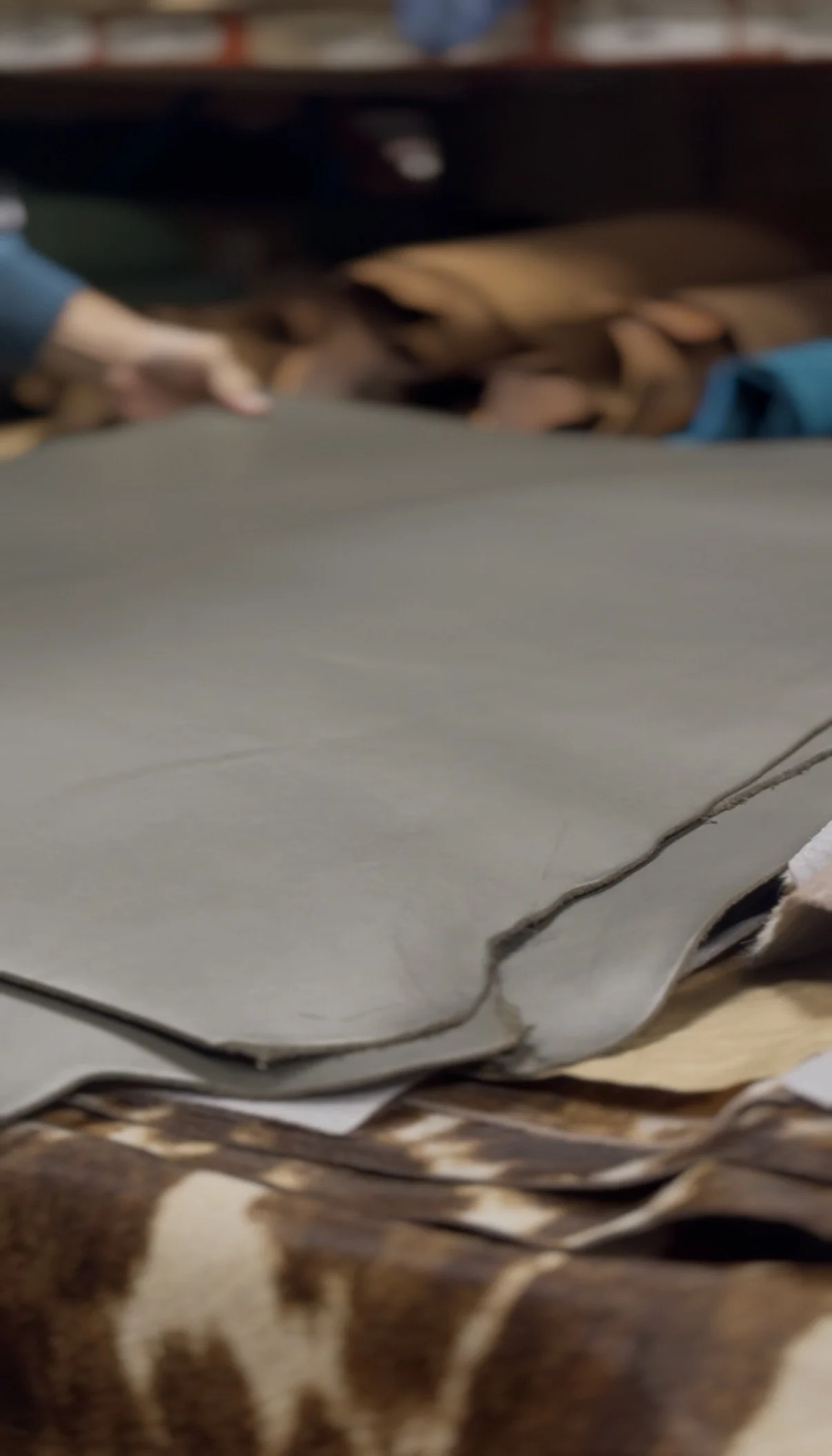
Choosing leather by hand is a completely different experience to choosing from a swatch book. You feel the temper — the firmness and flexibility of the hide. You check the grain — the natural surface of the leather that will become more beautiful with use. You look at the colour range and consider how each shade will age, because vegetable-tanned leather does not stay the colour it arrives. It deepens, warms, and develops a patina over months and years of handling that cannot be replicated in a factory or rushed in production.
Going to the tannery also keeps us honest. When you have seen where the leather comes from, held the raw hides, and understood the process that produced them, you cannot make careless decisions about what you do with them. The knowledge is present in every cut.
What vegetable-tanned leather is and why it matters
Vegetable tanning is the oldest method of leather production. It uses natural tannins derived from natural things like tree bark, leaves rather than the chromium salts used in industrial chrome tanning. The process takes weeks rather than hours. It is more expensive, more labour-intensive, and significantly more sustainable.
The result is a leather that behaves differently to anything chrome-tanned. It starts firm and pale. In the first few months of use it softens and begins to take on warmth. Over years it develops a rich, deep patina that is unique to the person who carries it — shaped by the pressure of a pocket, the oils of a hand, and the light and weather it has been carried through. No two pieces age alike. That is not a flaw. It is the entire point.
What Leather Working Group certification means
The Leather Working Group is an independent international body that audits tanneries against environmental and ethical criteria: water usage and treatment, chemical management, energy consumption, traceability of the leather supply chain, and worker welfare. Gold and silver rated tanneries represent the highest standard of responsible leather production in the world.
We source exclusively from LWG gold and silver rated tanneries, and other consortiums. We buy directly from the tannery which means we have full visibility of where our leather comes from and full confidence in the standard it was produced to.
For brands and businesses working toward B-Corp certification, or with active ESG and sustainability commitments, we can share full details of the tanneries we source from and the leathers we use, so your procurement team has complete supply chain transparency.
What we look for when we visit
We look for consistency of grain across the hide, consistency of colour across the hides. We look for natural markings — the small scars and variations that tell you this is a genuine full-grain leather, not a corrected or split leather that has been sanded and coated to hide its character. We look at how the edge of the hide behaves when cut — we look at the size of the hide, carefully creating a layout plan for our making to reduce wastage.
Everything we bring back from the tannery will be used. We design our patterns for minimal waste, and the offcuts from larger pieces become keyrings, bag charms, and smaller pieces Nothing is discarded if it can be made into something.
This is what we mean when we say Priestleys is circular by design. It starts at the tannery, and it carries through every stage of the making.
Priestleys makes bespoke leather goods for individuals, brands, and hospitality businesses from our studio in Lincolnshire. To enquire about a commission, email studio@priestleys.uk or visit priestleys.uk/business-and-hospitality.